Garment branding is a very important part of the apparel industry, especially for promotional and workwear used for employee identification and as part of a company’s marketing strategy and brand image.
We offer a wide range of techniques to choose from—below are some of them.

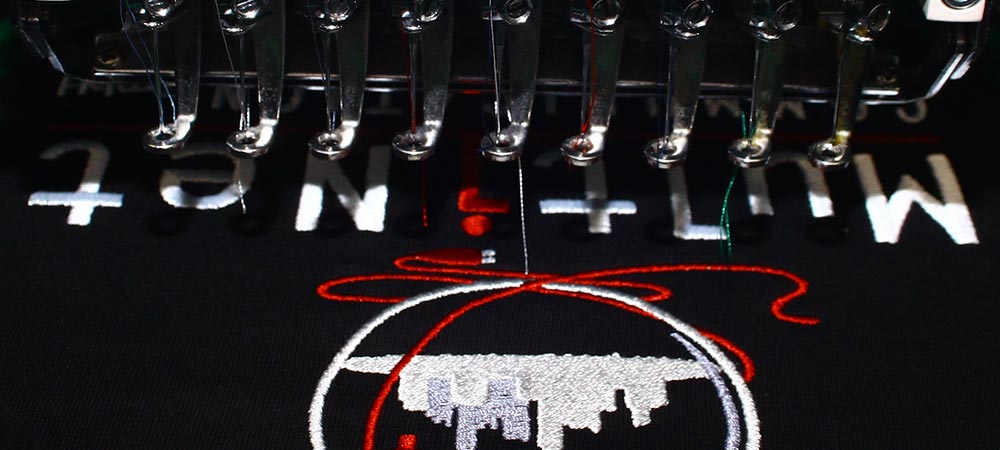
Computer embroidery is a premium technique, but it has certain limitations—for example, due to thread thickness we can’t reproduce very fine details, and depending on the type of fabric: on very thin materials the embroidery may cause puckering, and delicate fabrics may be damaged. That’s why embroidery digitizing should be developed specifically for the fabric type, e.g., for a T-shirt, polo, fleece, or jacket.
Embroidery is also a very durable technique—often more durable than the garment it’s applied to. When pricing embroidery, the stitch count is crucial, as it roughly translates into the time the embroidery machine needs to stitch the design. In addition to standard embroidery, we can also produce 3D puff embroidery, embroidery with fluorescent threads, or reflective threads. We also often use embroidered patches—embroidery made on fabric, cut to shape, and sewn onto the garment.
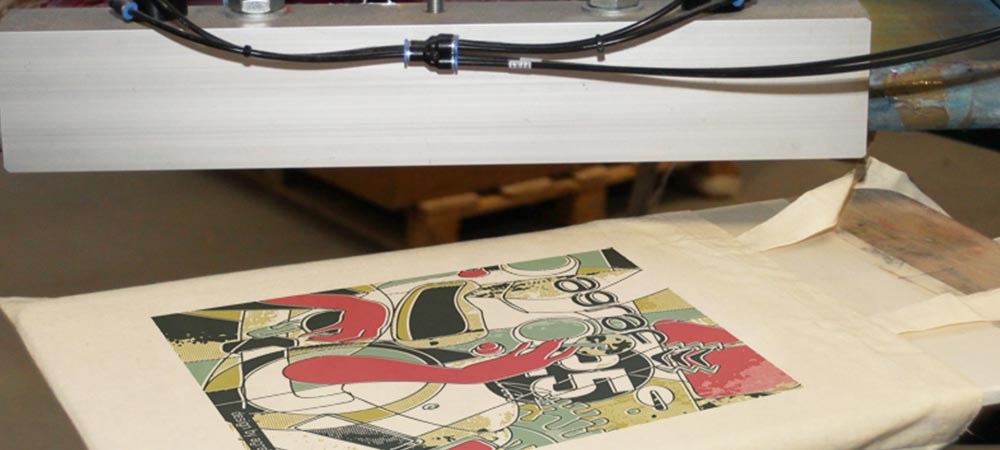
Screen printing is an excellent technique, but as with everything, the devil is in the details. Standard printing with plastisol inks is resistant to repeated washing, reproduces colors well, and allows printing large, solid areas. It works best when printing artwork made of specific spot colors (e.g., Pantone). When printing multicolor, halftone designs, the screens must be prepared properly—but the customer should keep in mind that this technique will not reproduce a photograph the same way offset printing does on paper.
Printing with plastisol inks creates the so-called “rubber” feel. Screen printing, as the oldest printing technique, has evolved greatly over thousands of years, but the principle remains the same: ink is pushed through the openings in the mesh using a squeegee. Of course, the hand squeegee has been replaced by an automatic one, and for apparel, prints began to be made on a so-called carousel, which allows printing many colors and many T-shirts at the same time.
Screen printing doesn’t use only plastisol inks. Water-based inks are also used (subtle, soft to the touch, but not as durable and more expensive to use), puff inks (after printing the ink “rises,” creating a 3D effect), HD inks (similar, but with sharp edges), fluorescent inks (glow in the dark), reflective inks (reflect light falling on the garment), latex inks, gel inks, and so on.
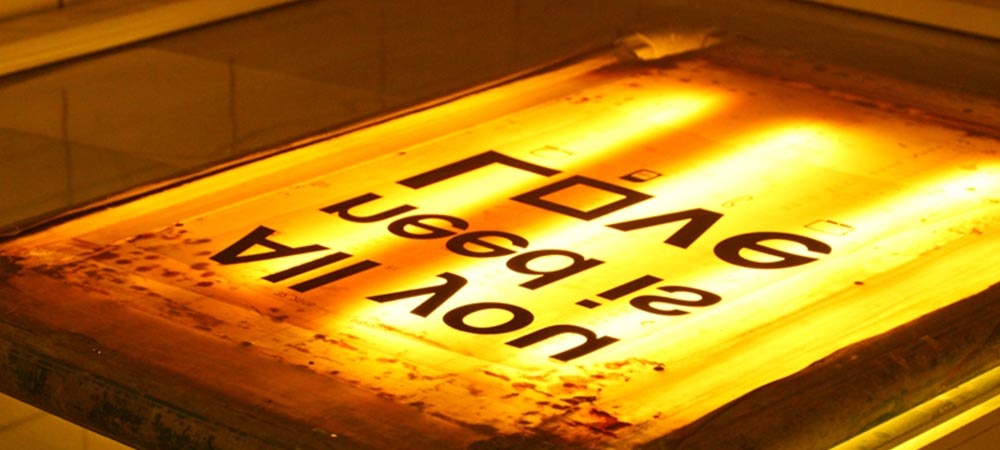
In our work we also use screen-printed heat transfers. We print the design mirrored on paper and then heat-press it onto a T-shirt or sweatshirt.
More and more often, we use branding techniques based on digital technologies. A commonly used method is digital heat transfer—digital printing onto paper or film and then heat-pressing it into the fabric using a heat press.
A specific variation of this method is sublimation: printing with sublimation inks onto paper (in mirror image) and then heat-pressing it into polyester fabric, or polyester-cotton blends. In this case, the dye doesn’t sit on the surface of the fabric—it sublimates and migrates into the polyester fibers, dyeing them throughout. It’s a very durable technique that doesn’t block the fabric’s pores, used primarily for sportswear.
One of the key techniques in recent years is DTG (Direct To Garment). It’s a direct-to-fabric printing method for T-shirts and sweatshirts using DTG printers. This technique delivers very accurate, photo-quality reproduction on fabric, is cost-effective for small runs, and enables affordable personalization. For larger quantities, we recommend screen printing as a cheaper and more durable option. DTG can withstand many washes on promotional and workwear if proper care is followed—washing at 30°C and avoiding aggressive detergents.
We also produce custom labels and sew them into garments, as well as make paper hang tags and cardboard boxes for individual T-shirts, sweatshirts, and jackets.
Our graphic design STUDIO, specializing not only in workwear and promotional clothing, will advise you and design your logo, adapt your artwork for printing on fabric, prepare embroidery digitizing, or create color separations for screen printing. Our sales team and technologists will help you choose the right corporate apparel and the best branding technique, while our logistics department will select the optimal packaging method and ensure reliable, cost-effective shipping.

LPP Printable focuses on sustainability and adapting to customer needs. LPP Printable is a group of clothing brands that specializes in work and promotional clothing.

Promostars is a brand specializing in the production of promotional and advertising clothing. The brand emphasizes quality, diversity, and product availability.

Crimson Cut is a brand that specializes in the production of streetwear and trendy clothing, often combining modern design with classic elements.
Mark The Helper is a clothing brand that focuses on creating functional workwear. The brand places a strong emphasis on the quality of materials.

Geffer is a clothing brand that specializes in the production of modern and functional apparel, often in casual and sporty styles.

AGRAF Office
ul. Sielska 14 B
10-802 Olsztyn
tel.: 89 527 34 74
gsm: +48 609 803 066
gsm. EN: +48 887 300 075
gsm. DE: +49 176 622 01 792
tel. RU: +48 89 522 93 80
e-mail: biuro@www.crimson-cut.pl